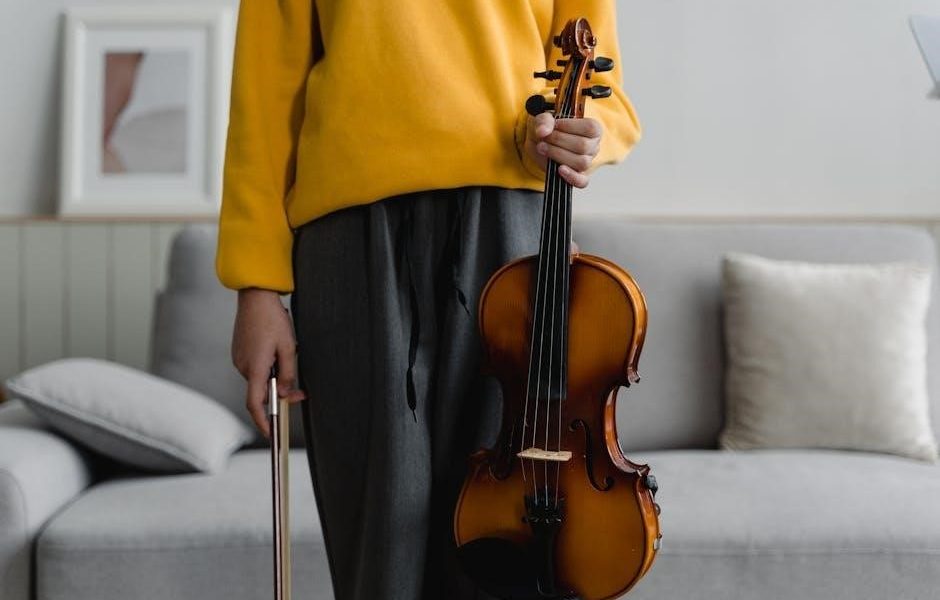
Violin Size Guide: Finding the Perfect Fit
Selecting the correct violin size is crucial for comfort and progress‚ ensuring proper posture and technique development for players of all ages and skill levels.
Violins come in various sizes – from full size (4/4) down to 1/32 – accommodating different arm lengths and body proportions‚ impacting playability.
Accurate measurement and understanding the sizing chart are essential steps in finding the perfect fit‚ leading to a more enjoyable and successful learning experience.
Understanding Violin Sizes
Violin sizing isn’t arbitrary; it’s directly linked to the player’s physical dimensions‚ primarily arm length. Instruments are manufactured in a range of sizes‚ denoted by fractions – 4/4‚ 3/4‚ 1/2‚ 1/4‚ 1/8‚ and even smaller‚ like 1/10‚ 1/16‚ and 1/32. The 4/4 violin represents the full‚ standard size‚ typically suitable for most adults.
These fractional sizes indicate a proportional reduction in the instrument’s overall length. A 3/4 size violin is three-quarters the length of a full-size violin‚ and so on. This scaling ensures that a player can comfortably reach all strings and maintain proper playing posture without straining. Choosing the right size isn’t just about being able to physically hold the violin; it’s about optimizing technique and preventing potential injuries.
It’s important to remember that age isn’t always a reliable indicator of the correct size. While general guidelines exist‚ individual body proportions vary significantly. Therefore‚ a precise measurement of arm length is the most accurate method for determining the appropriate violin size for each player.
Available Violin Sizes
The violin family offers a comprehensive range of sizes to accommodate players of all ages and statures. Starting with the largest‚ the 4/4‚ or full-size violin‚ is the standard for most adult players. Moving down in size‚ we find the 3/4‚ commonly suited for older children and smaller adults.
Next is the 1/2 size‚ frequently used by elementary school students. The 1/4 size is popular for younger beginners‚ typically around 8-10 years old. For very young children‚ even smaller sizes are available‚ including the 1/8‚ 1/10‚ 1/16‚ and the smallest‚ 1/32 size violins.
These progressively smaller sizes ensure that even the youngest learners can hold and play an instrument comfortably and correctly. The availability of such a wide spectrum of sizes is crucial for fostering a positive learning experience and preventing physical strain. Each size maintains the instrument’s proportions‚ offering a scaled-down version of the full-size violin.
The Importance of Correct Violin Size
Selecting the appropriate violin size is paramount for a student’s progress and physical well-being. An incorrectly sized instrument can hinder technique development‚ leading to frustration and potentially bad habits. A violin that is too large forces the player into awkward postures‚ causing strain and discomfort.
Conversely‚ a violin that is too small restricts reach and limits the development of proper bowing and fingering technique. Correct size ensures comfortable reach to all strings‚ promoting good posture and efficient playing. This‚ in turn‚ minimizes the risk of developing injuries like tendonitis or carpal tunnel syndrome.
Ultimately‚ a well-fitted violin fosters a more enjoyable learning experience‚ allowing students to focus on musicality rather than struggling with the instrument itself. Prioritizing correct sizing is an investment in a student’s long-term success and passion for playing.

Measuring for a Violin
Accurate measurements are key to finding the right fit‚ typically involving extending the left arm and measuring from the shoulder to the palm’s center.
Tools Needed for Measurement
Fortunately‚ determining the appropriate violin size doesn’t require specialized or expensive equipment! The most essential tool is a simple‚ flexible measuring tape – the kind commonly used for sewing or construction will work perfectly.
A standard ruler can be used as an alternative‚ but a measuring tape offers greater convenience and accuracy‚ especially when dealing with younger or less cooperative individuals.
Beyond the measuring device itself‚ having a helper can be incredibly beneficial‚ particularly when measuring a child. An extra set of hands ensures the arm is fully extended and the tape remains positioned correctly.
While not strictly necessary‚ a pen and paper (or a note-taking app on a smartphone) are helpful for recording the measurement accurately‚ preventing any confusion later on when consulting a violin size chart.
Lastly‚ a flat‚ stable surface to stand against can aid in maintaining proper posture during the measurement process‚ contributing to a more reliable result.
Step-by-Step Measurement Guide
Begin by having the student stand with their left arm extended straight out from their shoulder‚ as if holding a violin. The palm should be facing upwards‚ and the arm should be relaxed‚ not tense or bent.
Next‚ carefully position the end of the measuring tape at the base of the neck‚ where the shoulder begins. Ensure the tape measure is snug but not constricting.
Extend the tape measure along the extended arm‚ keeping it straight‚ and measure to the center of the palm. It’s crucial to measure to the fleshy part of the palm‚ not the fingertips.
Record this measurement in inches or centimeters‚ depending on the scale of your preferred violin size chart. Double-check the measurement to ensure accuracy‚ as even a small difference can impact size selection.
Repeat the process a couple of times to confirm consistency. If there are variations‚ take the average of the measurements for the most reliable result.
Measuring Arm Length: Shoulder to Palm
Accurately determining the length from the shoulder to the palm is the cornerstone of proper violin sizing. This measurement directly correlates to the appropriate violin size needed for comfortable and effective playing.
Start at the base of the neck‚ identifying the point where the shoulder and upper arm connect. This is where you’ll begin your measurement with the tape measure.
Ensure the student’s left arm is fully extended‚ but not locked‚ and the palm is facing upwards. A relaxed‚ natural posture is essential for an accurate reading.
Extend the tape measure along the arm‚ maintaining a straight line‚ until you reach the center of the palm. Focus on the fleshy part of the palm‚ avoiding the fingertips.
Record the measurement carefully‚ noting whether it’s in inches or centimeters. This single number will be your key to referencing a violin size chart and finding the ideal fit.

Violin Size Chart
Below is a comprehensive chart detailing standard violin sizes‚ ranging from the largest 4/4 (full size) down to the smallest 1/32‚ for optimal fit.
These sizes – 4/4‚ 3/4‚ 1/2‚ 1/4‚ 1/8‚ 1/10‚ 1/16‚ and 1/32 – correspond to specific arm length measurements‚ ensuring comfortable playing.
Full Size (4/4) Violin
The 4/4‚ or full-size violin‚ is the standard instrument typically used by most adult players and older teenagers. It’s considered the baseline for violin dimensions and is generally suitable for individuals with longer arm lengths.
To determine if a 4/4 violin is the right fit‚ a player should be able to comfortably hold the instrument under their chin without excessive stretching or hunching. The arm length‚ measured from the shoulder to the palm‚ should generally be 23.5 inches or longer.
However‚ it’s important to remember that age isn’t always the best indicator; body proportions vary significantly. A smaller-framed adult or a taller teenager might still find a 3/4 size more manageable. Proper posture and ease of reaching the strings are key indicators of a good fit; If a player struggles to reach the strings comfortably or experiences strain‚ a smaller size should be considered.
Choosing the correct size from the start can prevent bad habits and potential injuries‚ fostering a more enjoyable and productive learning experience.
3/4 Size Violin
The 3/4 size violin is a popular choice for students aged approximately 10-12‚ though age is merely a guideline. It’s designed for players whose arm length falls between 22 and 23.5 inches when measured from the shoulder to the center of the palm.
This size offers a comfortable playing experience for those who find a full-size violin too large or unwieldy. It allows for proper technique development without straining to reach the strings or compromising posture. A correctly sized violin promotes good form and prevents potential injuries.
Players using a 3/4 size violin should be able to hold the instrument securely under their chin without hunching or extending their neck excessively. The fingers should comfortably reach all positions on the fingerboard. If reaching feels strained‚ or the instrument feels too heavy‚ a smaller size might be more appropriate.
Regular reassessment is crucial‚ as children grow quickly‚ and a 3/4 size may become too small within a year or two.
1/2 Size Violin
The 1/2 size violin typically suits children between the ages of 7 and 10‚ but arm length is the definitive factor. A measurement of 20 to 22 inches from the shoulder to the palm indicates a good fit for this size. It’s a crucial step in a young musician’s development.
This size allows younger students to comfortably hold and maneuver the instrument‚ fostering proper technique from the beginning. It prevents them from struggling with an instrument that’s too large‚ which can lead to frustration and poor habits.
A well-fitted 1/2 size violin enables students to reach the strings without excessive stretching or compromising their posture. It’s essential to observe the player’s form to ensure they aren’t hunching or straining.
Growth spurts are common‚ so regular checks are vital. A child may quickly outgrow a 1/2 size‚ necessitating a move to a 3/4 size within a relatively short period.
1/4 Size Violin
The 1/4 size violin is generally appropriate for children aged 5 to 7‚ though‚ as with all sizes‚ arm length is the most reliable indicator. A measurement of approximately 18 to 20 inches from the shoulder to the center of the palm suggests this size is a good match.
This smaller instrument is designed for young beginners‚ allowing them to develop fundamental skills without being overwhelmed by the size and weight of a larger violin. It promotes correct hand positioning and bowing technique.
Proper fit is paramount; a 1/4 size violin should allow the child to comfortably reach all strings without straining. Observe their posture carefully to ensure they aren’t reaching excessively or hunching over the instrument.
Regular monitoring is crucial‚ as children grow rapidly. A move to a 1/2 size violin may be necessary within a year or two‚ depending on the child’s growth rate and playing progress.
1/8 Size Violin
The 1/8 size violin typically suits children aged 3 to 5‚ but again‚ prioritize arm length measurement over age. An arm length of roughly 16 to 18 inches from shoulder to palm usually indicates a suitable fit for this diminutive instrument;
Designed for the youngest beginners‚ the 1/8 size violin allows very small hands to comfortably grasp the neck and bow‚ fostering early musical development. It’s a crucial stepping stone for introducing children to the world of string instruments.
Ensure the child can hold the violin securely under their chin without discomfort or strain. Observe their posture; they should be able to maintain a relaxed and upright position while playing.
Growth spurts are common at this age‚ so frequent checks are essential. Be prepared to transition to a 1/4 size violin relatively quickly‚ potentially within six to twelve months‚ depending on the child’s development.
Smaller Sizes: 1/10‚ 1/16‚ 1/32
For very young children‚ typically under the age of 4‚ the 1/10‚ 1/16‚ and 1/32 size violins provide an appropriately scaled instrument. These sizes are reserved for the smallest players‚ with arm lengths measuring approximately 14-16 inches (1/10)‚ under 14 inches (1/16)‚ and even smaller for the 1/32.
Finding these smaller sizes can sometimes be challenging‚ as they are less commonly stocked by retailers. It’s crucial to prioritize a proper fit‚ even if it means ordering online or seeking a specialized violin shop.
Observe the child’s ability to comfortably hold and maneuver the violin and bow. Proper technique is still important‚ even at this early stage‚ and a correctly sized instrument facilitates good habits.
Transitioning from these very small sizes happens quickly‚ often within months‚ as children grow rapidly. Regular monitoring of arm length is vital to ensure they progress to the next appropriate size.
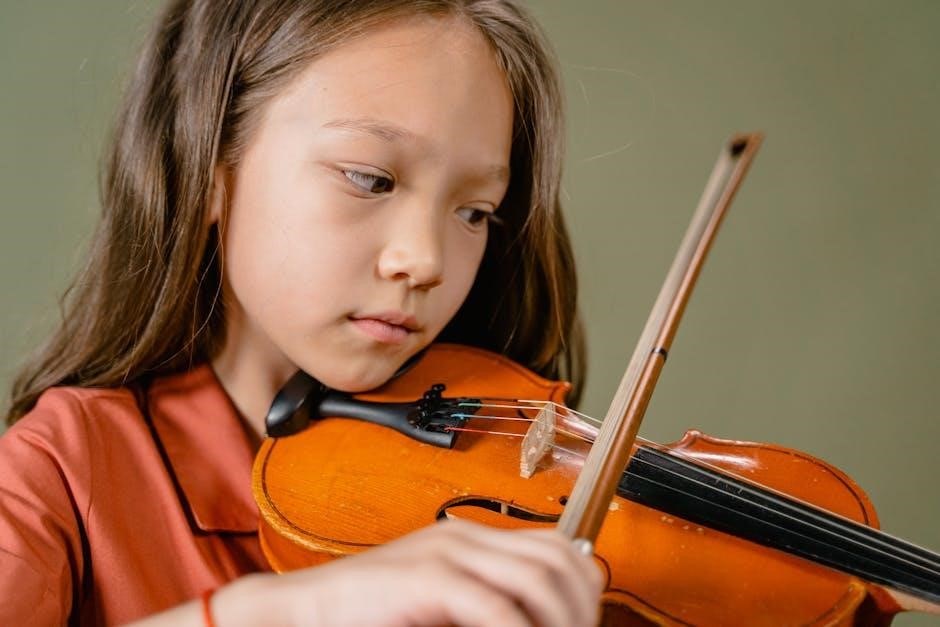
Factors Affecting Violin Size Choice
Beyond arm length‚ age‚ growth spurts‚ and individual body proportions all influence the ideal violin size‚ requiring careful consideration for optimal playing comfort.
Age as a General Guideline
While age provides a starting point‚ it’s not a definitive indicator of the correct violin size. Generally‚ children aged 5-6 often begin with a 1/8 size‚ progressing to 1/4 by ages 7-8‚ and 1/2 around ages 9-10.
However‚ these are broad estimations; individual growth rates vary significantly. Most adults comfortably play a full-size (4/4) violin‚ but physical development differs.
It’s crucial to remember that a child’s skeletal maturity‚ not just chronological age‚ dictates the appropriate size. Relying solely on age can lead to an ill-fitting instrument‚ hindering progress and potentially causing discomfort.
Therefore‚ always prioritize accurate measurement of arm length‚ as detailed in the sizing guide‚ over simply assuming a size based on a child’s age. A proper fit fosters good technique and enjoyment.
Using age as a preliminary guide is acceptable‚ but it must be confirmed with precise measurements to ensure the best possible playing experience.
Growth Spurts and Re-sizing
Children experience growth spurts‚ particularly during adolescence‚ necessitating periodic re-evaluation of their violin size. It’s common for a student to require a larger instrument mid-year if a significant growth spurt occurs.
Regularly check the fit – approximately every six months – by re-measuring arm length. Signs an instrument is too small include excessive stretching to reach the strings or a cramped playing posture.
Resizing isn’t merely about comfort; it directly impacts technique. An improperly sized violin can hinder proper bow hold‚ intonation‚ and overall musical development.
Rental programs are advantageous during these growth phases‚ allowing for easy instrument exchanges as needed‚ avoiding costly purchases of multiple sizes.
Don’t hesitate to consult with a violin teacher or experienced shop staff for guidance on determining when re-sizing is necessary. Prioritize a comfortable and technically sound fit.
Individual Body Proportions
While age provides a general guideline‚ individual body proportions significantly influence the ideal violin size. Children of the same age can have vastly different arm lengths and torso sizes.
Reliance solely on age charts can lead to inaccurate sizing. A child with longer arms may require a larger instrument than their age suggests‚ while a smaller-framed child might need a smaller size.
The most accurate method remains measuring the arm length from the shoulder to the palm‚ as this directly correlates with the reach needed to comfortably play the violin.
Consider torso length as well; a longer torso might necessitate a slightly larger instrument for optimal playing posture and balance.
Prioritize a fit that allows the player to hold the violin comfortably without strain‚ ensuring proper technique and preventing potential injuries. Individual assessment is key.
Violin Size and Playing Comfort
A correctly sized violin promotes good posture‚ effortless string access‚ and prevents strain‚ fostering a comfortable and enjoyable playing experience for musicians of all levels.
Impact of Size on Posture
The relationship between violin size and posture is profoundly important‚ especially for developing players. An instrument that is too large forces the student to hunch or overextend‚ leading to tension in the shoulders‚ neck‚ and back. This compromised posture hinders proper technique and can ultimately cause physical discomfort or even injury over time.
Conversely‚ a violin that is too small requires excessive reaching and contortion‚ also disrupting natural alignment. Ideally‚ the violin should rest comfortably against the collarbone without requiring the player to strain or compensate. Proper shoulder rest and chin rest adjustments further contribute to a balanced and relaxed posture.
Maintaining a straight back‚ relaxed shoulders‚ and a level head are hallmarks of good violin playing posture‚ all of which are significantly influenced by selecting the appropriate instrument size; Prioritizing correct size ensures a foundation for healthy playing habits and long-term musical enjoyment.
Reaching the Strings Easily
A correctly sized violin allows the player to comfortably reach all strings with a curved finger‚ without straining or extending the arm excessively. If the instrument is too large‚ reaching the lower strings becomes a struggle‚ potentially leading to a flattened hand position and compromised intonation. Conversely‚ a violin that’s too small might make reaching the higher strings awkward and inefficient.
The ability to effortlessly access all parts of the fingerboard is crucial for developing proper technique and musical expression. Students should be able to shift positions smoothly and accurately without contorting their hand or wrist. This ease of reach fosters confidence and encourages exploration of the instrument’s full range.
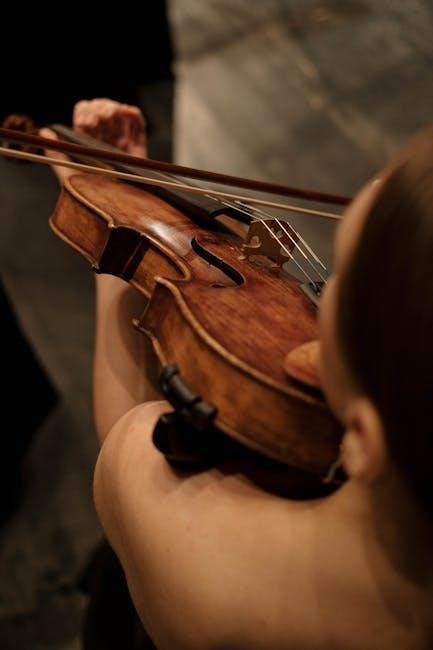
Observing the student’s hand position while playing is key; a relaxed‚ curved hand indicates a good fit‚ while tension or stretching suggests the need for a smaller size. Prioritizing comfortable reach promotes efficient playing and prevents the development of bad habits.
Avoiding Strain and Injury
Playing the violin with an improperly sized instrument can lead to significant physical strain and potential injuries‚ particularly in developing musicians. An oversized violin forces players to overextend their arms‚ shoulders‚ and neck‚ causing muscle fatigue and discomfort. This can manifest as pain in the back‚ shoulders‚ wrists‚ or even numbness in the fingers.
Conversely‚ a violin that is too small can also create problems‚ as it may require awkward postures to reach the strings‚ leading to tension in the hands and arms. Prolonged playing in these compromised positions can contribute to conditions like tendonitis or carpal tunnel syndrome.
Prioritizing a correct fit minimizes these risks‚ allowing for a relaxed and natural playing posture. Regular breaks‚ proper technique instruction‚ and attentive listening to the body’s signals are also vital in preventing strain and ensuring long-term musical health.

Rental vs. Purchase Considerations
Renting a violin is ideal for beginners‚ allowing size adjustments as they grow‚ while purchasing is better for committed students seeking long-term investment.
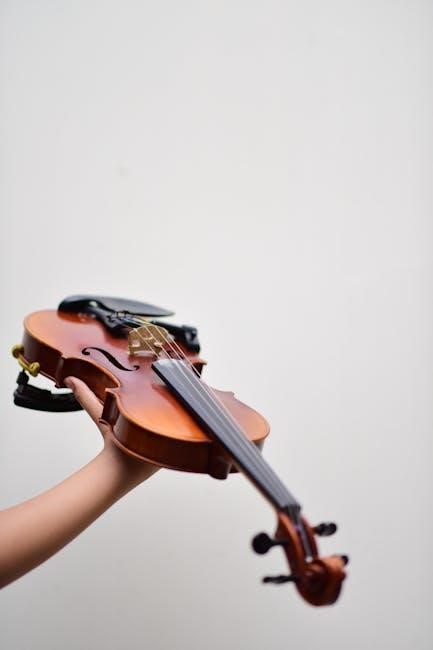
Resale value varies by size; full and 3/4 size violins generally retain more value than smaller instruments‚ impacting future financial returns.
Careful evaluation of playing commitment and growth potential guides the optimal choice between renting and purchasing a violin for students;
Benefits of Renting for Beginners
For those just starting their musical journey with the violin‚ renting presents a remarkably sensible and cost-effective option. It eliminates the significant upfront investment associated with purchasing an instrument‚ which can be substantial‚ especially considering the uncertainty of long-term commitment.
A crucial advantage lies in accommodating growth spurts. Children‚ in particular‚ experience rapid physical changes‚ necessitating frequent violin size adjustments. Renting allows for easy exchanges as their arm length increases‚ ensuring they always play on an appropriately sized instrument‚ fostering proper technique and preventing strain.
Furthermore‚ rental agreements often include maintenance and repair services‚ providing peace of mind and protecting against unexpected expenses. This is particularly beneficial for beginners unfamiliar with instrument care. It allows them to focus on learning and enjoying the violin without the added worry of potential damage or costly repairs. Renting truly lowers the barrier to entry and encourages musical exploration.
When to Consider Purchasing
As a student progresses and demonstrates a sustained commitment to violin playing‚ transitioning from renting to purchasing becomes a worthwhile consideration. This typically occurs after a year or two of consistent lessons and practice‚ indicating a genuine passion for the instrument.
Purchasing allows for personalization and ownership‚ fostering a deeper connection with the violin. Selecting an instrument tailored to individual preferences – considering tone‚ wood‚ and craftsmanship – can significantly enhance the playing experience.
Moreover‚ a purchased violin holds resale value‚ particularly if well-maintained. While depreciation occurs‚ a quality instrument can recoup a portion of the initial investment should the player eventually upgrade. However‚ it’s vital to research resale values for different sizes‚ as demand for smaller sizes diminishes as students grow. Ultimately‚ purchasing signifies a long-term dedication and unlocks the potential for a more refined and personalized musical journey.
Resale Value of Different Sizes
The resale value of a violin is significantly impacted by its size‚ with full-size (4/4) instruments commanding the highest prices due to their broader appeal and continued use by adult players. As sizes decrease‚ resale value generally diminishes.
3/4 and 1/2 size violins retain some value‚ particularly if they are well-maintained and from reputable makers‚ as they cater to a larger segment of intermediate students. However‚ smaller sizes – 1/4‚ 1/8‚ 1/10‚ 1/16‚ and 1/32 – experience substantial depreciation.
This is because children quickly outgrow these sizes‚ creating a limited market of potential buyers. Expect to recoup only a small fraction of the original purchase price for very small violins. Considering this‚ renting smaller sizes is often the most economical option‚ while purchasing is more sensible for larger sizes where resale value is more substantial.