Irritrol Controller Manual: A Comprehensive Guide
This manual details Irritrol controllers, encompassing installation, programming, troubleshooting, and maintenance for models like H4000, HR-6000, and LIFE series, ensuring optimal irrigation.
Irritrol controllers represent a cornerstone of modern irrigation systems, offering reliable and efficient water management for residential and commercial landscapes. For decades, Irritrol has been a trusted name, known for durable construction and user-friendly designs. This guide serves as a comprehensive resource for understanding, installing, programming, and maintaining these vital components.
Whether you’re a seasoned landscaping professional or a homeowner tackling a DIY project, mastering your Irritrol controller is key to a healthy, vibrant outdoor space. From basic operation to advanced features like cycle and soak, this manual will demystify the process. We’ll explore various models, including the popular H4000, HR-6000/6100 series, and the versatile LIFE controller, detailing their specific capabilities and programming nuances. Proper understanding ensures water conservation and optimal plant health, maximizing the benefits of your irrigation investment.
What is an Irritrol Controller?
An Irritrol controller is the central command center for an automatic irrigation system. It functions as a timer and signal distributor, orchestrating the watering schedule for various zones within a landscape. These controllers receive input from sensors – such as rain or flow sensors – and utilize this data to adjust watering cycles, preventing overwatering and conserving resources.
Essentially, it automates the process of turning irrigation valves on and off, eliminating the need for manual operation. Irritrol offers a range of controllers, from simple, entry-level models to sophisticated, feature-rich units capable of managing complex irrigation needs. They are designed to work with various valve types and can be programmed to accommodate diverse plant types and soil conditions. The controllers ensure efficient water distribution, promoting healthy plant growth and reducing water waste, contributing to sustainable landscaping practices.
Benefits of Using an Irritrol Irrigation Controller

Employing an Irritrol irrigation controller delivers numerous advantages for homeowners and landscaping professionals alike. Primarily, it offers significant water conservation by automating schedules and responding to environmental factors via sensor integration, preventing wasteful overwatering. This leads to reduced water bills and a smaller environmental footprint.
Furthermore, Irritrol controllers promote healthier landscapes through precise watering tailored to specific plant needs and soil types. Automated systems free up valuable time and effort compared to manual irrigation. The controllers’ reliability and durability, coupled with features like cycle and soak functionality, ensure consistent performance. Models like the H4000 and LIFE series offer user-friendly programming and advanced features, enhancing control and efficiency. Ultimately, an Irritrol controller provides peace of mind and a beautifully maintained landscape.
Understanding Irritrol Controller Models
Irritrol offers diverse controllers, including the H4000, HR-6000/6100, and LIFE series (4, 6, 8 stations), each designed with varying station capacities and features for diverse needs.
H4000 Irrigation Controller Overview
The Irritrol H4000 is a popular retail-focused irrigation controller known for its user-friendly interface and reliable performance. This model provides straightforward programming for residential and light commercial applications. It’s designed to manage various irrigation zones efficiently, offering features like multiple start times and independent program operation.
The H4000 boasts a durable construction suitable for both indoor and outdoor installations, protected within an aesthetically pleasing enclosure. Basic operating instructions are readily available, making setup and initial programming accessible to a wide range of users. It supports flexible scheduling options, allowing customization to meet specific landscape watering requirements.
Furthermore, the H4000 is compatible with various sensors, including rain and flow sensors, enhancing water conservation efforts and preventing overwatering. Its intuitive design simplifies adjustments and modifications to watering schedules as seasonal changes occur. The controller’s robust design ensures long-term reliability and consistent operation, making it a dependable choice for irrigation management.
HR-6000 & HR-6100 Series Controllers
The Irritrol HR-6000 and HR-6100 series represent a step up in functionality, catering to more demanding irrigation needs in residential and commercial settings. These controllers offer expanded features compared to the H4000, including greater station capacity and advanced programming options. They are designed for efficient water management and precise control over irrigation zones.
Key enhancements include the ability to handle larger landscapes with more complex watering schedules. The HR series supports multiple programs, allowing for customized irrigation plans for different areas of a property. These controllers also feature robust diagnostic capabilities, aiding in troubleshooting and identifying potential issues within the irrigation system.
Compatibility with a wider range of sensors, including master valves and flow sensors, further enhances their functionality and water conservation capabilities. The HR-6000 & HR-6100 series provide a reliable and versatile solution for professional irrigation management, offering a balance of performance and user-friendliness.
LIFE Controller Series (4, 6, 8 Station Models)
Irritrol’s LIFE Controller series offers a modern and efficient approach to irrigation management, available in 4, 6, and 8-station configurations to suit various landscape sizes. These controllers are known for their user-friendly interface and smart features designed to conserve water and simplify operation. The LIFE series boasts a durable construction and reliable performance, making them suitable for both residential and light commercial applications.
A key feature of the LIFE controllers is their intuitive programming, allowing users to easily set up and adjust watering schedules. They also incorporate advanced functions like Cycle and Soak, which promotes deeper root growth and reduces water runoff. Different models, like LIFE-B-4, LIFE-B-6, and LIFE-B-8, cater to specific station requirements.
The LIFE series is designed for easy installation and maintenance, offering a cost-effective and sustainable irrigation solution. They represent Irritrol’s commitment to innovation and water-wise landscaping practices.
Station Capacity and Terminal Boards
Irritrol controllers demonstrate flexibility in station capacity, accommodating diverse irrigation needs. Models range from smaller 4-station units, ideal for residential lawns, to larger 24-station controllers suited for expansive commercial landscapes. This scalability ensures efficient water distribution regardless of property size.
The terminal boards within Irritrol controllers are crucial for connecting zone valves. 6-, 9-, and 12-station models typically feature 12-station terminal boards, providing ample space for wiring. Larger 15-, 18-, and 24-station controllers utilize 24-station terminal boards, offering increased connectivity.
Properly utilizing the terminal boards is essential for correct wiring and system functionality. The design allows for easy identification and organization of valve connections, simplifying installation and troubleshooting. Understanding station capacity and terminal board configurations is vital for optimal system performance.

Installation and Wiring
Proper installation involves secure mounting, connecting zone valves, supplying power, and wiring sensors like rain or flow sensors for automated, efficient irrigation control.
Controller Mounting and Location
Selecting the right location for your Irritrol controller is crucial for longevity and ease of access. Mount the controller indoors, protecting it from direct sunlight, rain, and freezing temperatures. A garage, basement, or utility room are ideal choices; Ensure the location is easily accessible for programming and maintenance, but also secure to prevent unauthorized access or tampering.
When mounting, use appropriate hardware to securely attach the controller to a wall stud or solid surface. Avoid mounting near sources of electromagnetic interference, which could disrupt operation. Maintain adequate clearance around the controller for ventilation and wiring access. Consider proximity to a grounded electrical outlet for a reliable power supply. Proper mounting safeguards the controller from physical damage and ensures consistent performance, maximizing the lifespan of your irrigation system.
Wiring Zone Valves to the Controller
Connecting zone valves to the Irritrol controller requires careful attention to wiring diagrams. Each valve receives a signal from a designated terminal on the controller’s terminal board. Typically, a common wire connects to all valves, while individual wires run from each valve to its corresponding zone terminal. Ensure wires are appropriately sized for the distance and voltage to prevent voltage drop and ensure reliable operation.
Use wire connectors or terminal blocks to create secure and weatherproof connections. Double-check polarity and wire placement before applying power. Incorrect wiring can damage the controller or valves. Refer to the controller’s wiring diagram and valve manufacturer’s instructions for specific guidance. Proper wiring guarantees each zone operates independently and efficiently, delivering water precisely where and when needed for optimal irrigation performance.
Connecting the Power Supply
Proper power supply connection is crucial for Irritrol controller operation. Most Irritrol controllers require a 24VAC power source, typically supplied by a transformer. Ensure the transformer’s voltage and VA rating match the controller’s specifications – incorrect voltage can cause damage. Connect the transformer wires to the designated terminals on the controller’s terminal board, observing polarity if indicated.
Securely mount the transformer and protect it from the elements. Use appropriate wiring methods and connectors for a reliable connection. Before powering on, verify all connections are tight and correct. A stable power supply is essential for accurate timekeeping, programming retention, and consistent valve operation. Always disconnect power before performing any wiring adjustments to prevent electrical shock or equipment damage.
Sensor Wiring (Rain, Flow, Master Valve)
Irritrol controllers readily integrate with various sensors for enhanced irrigation management. Rain sensors prevent watering during precipitation, conserving water and preventing over-saturation. Flow sensors detect leaks or breaks in the irrigation system, halting operation to minimize water waste and potential damage. Master valve wiring allows control of a main valve, providing a safety shut-off and simplifying system maintenance.
Connect sensor wires to the appropriately labeled terminals on the controller’s terminal board. Refer to the controller’s wiring diagram for specific terminal locations. Ensure proper polarity if required by the sensor. Secure connections and protect wiring from the elements. Properly configured sensors significantly improve irrigation efficiency and protect your landscape investment.
Programming the Irritrol Controller
Effectively program your Irritrol controller by accessing programming mode, setting the correct date and time, and then creating customized watering schedules for optimal results.
Accessing the Programming Mode
Initiating the programming sequence on your Irritrol controller typically involves pressing and holding the “Program” or “Mode” button for a few seconds. The display will then shift from showing the current time or next scheduled watering time to a programming screen, often displaying options like “Schedule,” “Time,” or “Date.”
Depending on the specific Irritrol model – whether it’s an H4000, HR-6000, or a LIFE series controller – the exact button and screen prompts may vary slightly. Consult your controller’s specific manual for precise instructions. Some models might require entering a security code to prevent unauthorized changes to the programmed settings.
Once in programming mode, you’ll navigate through different settings using the arrow buttons (up, down, left, right) and confirm selections with the “Enter” or “Select” button. Remember to save any changes made before exiting programming mode to ensure they are retained. Failing to save could result in losing your customized settings.
Setting the Date and Time
Accurate date and time settings are crucial for your Irritrol controller to operate schedules correctly. Within the programming mode, navigate to the “Date” and “Time” settings using the arrow buttons. The display will likely show the current date and time, which you can then adjust.
Typically, you’ll modify the year, month, and day individually, followed by the hour and minute. Some controllers utilize a 24-hour clock format, while others use AM/PM. Ensure you select the correct format. Confirm each adjustment with the “Enter” or “Select” button.
After setting both the date and time, always save the changes before exiting the programming mode. Incorrect date or time settings can lead to watering schedules running at unintended times, potentially wasting water or harming your landscape. Double-check the settings before finalizing.

Programming Watering Schedules
To program watering schedules, first access the “Schedule” programming section within the controller’s menu. You’ll typically assign a schedule number (e.g., Schedule 1, Schedule 2) and then define its parameters. Begin by selecting the days of the week for watering – options often include individual days, odd/even days, or specific day groupings.
Next, set the “Start Time,” indicating when the watering cycle should begin; Following this, you’ll assign the zones to be included in this schedule. Each zone represents a specific area of your landscape. Finally, determine the “Run Time” for each zone, specifying how long the valves will remain open.
Remember to save each schedule after programming. Controllers often allow multiple schedules for varied watering needs. Review your programmed schedules to ensure accuracy and efficiency.
Adjusting Run Times and Start Times
Fine-tuning your irrigation often requires adjusting run times and start times. To modify run times, navigate to the schedule you wish to edit and select the specific zone. Increase or decrease the watering duration based on plant needs and weather conditions – longer times for drier periods, shorter for rainfall.
Adjusting start times allows you to optimize water usage and avoid peak demand. Consider starting cycles earlier in the morning to minimize evaporation. To change the start time, access the schedule and modify the designated start time for each zone or the entire schedule.
Remember to save any changes made. Regularly review and adjust these settings seasonally to maintain efficient irrigation.

Advanced Features and Troubleshooting
Explore cycle and soak, seasonal adjustments, and solutions for common issues like no power or inactive valves, alongside decoding error codes for efficient control.
Cycle and Soak Functionality
Cycle and Soak is a valuable feature within Irritrol controllers designed to improve water efficiency and prevent runoff, particularly on slopes or with heavy clay soils. This function divides a programmed watering time into multiple shorter cycles, interspersed with a “soak” period.
During the soak period, the water has time to penetrate the soil, reducing the likelihood of water flowing away before it can be absorbed by plant roots. This is especially beneficial for compacted soils that struggle to absorb water quickly.
To utilize Cycle and Soak, you’ll typically access the programming mode on your Irritrol controller and navigate to the specific zone settings. Within those settings, you’ll find an option to enable Cycle and Soak, often allowing you to customize the cycle length and soak duration. Experimenting with these settings based on your soil type and landscape conditions will optimize water usage and promote healthier plant growth. Proper implementation minimizes waste and maximizes irrigation effectiveness.
Seasonal Adjustment Options
Irritrol controllers offer seasonal adjustment capabilities, a crucial feature for optimizing water usage throughout the year. As weather patterns shift, plant water needs change, and a fixed watering schedule can lead to over or under-watering. Seasonal Adjustment allows you to globally increase or decrease watering run times across all zones, or individually adjust each zone as needed.
This is typically expressed as a percentage – for example, increasing run times by 10% during a hot, dry summer or decreasing them by 20% during a cooler, wetter spring. Accessing this feature usually involves navigating to a dedicated “Seasonal Adjust” section within the controller’s programming menu.
Regularly adjusting your watering schedule based on seasonal changes and local weather conditions ensures efficient water use, promotes healthy plant growth, and conserves valuable resources. Monitoring rainfall and temperature will help determine appropriate adjustment percentages.
Troubleshooting Common Issues (No Power, Valves Not Activating)
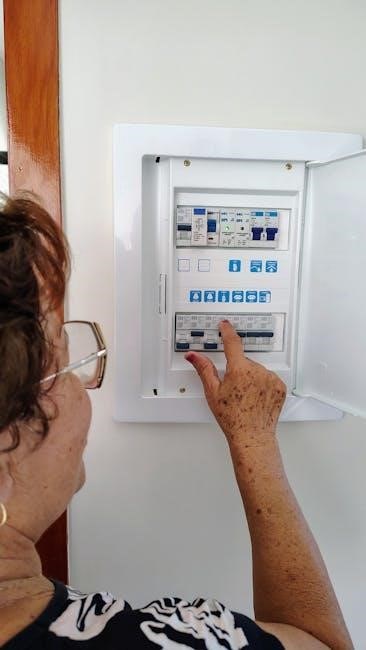
If your Irritrol controller has no power, first check the circuit breaker or fuse supplying power to the unit. Ensure the power supply is securely connected. If power is present but valves aren’t activating, verify the program is correctly set and the start time has passed. Inspect zone valve wiring for breaks or loose connections – a common culprit.
A faulty valve solenoid can also prevent activation. Test the solenoid with a multimeter to confirm functionality. If a master valve is installed, ensure it’s receiving power and opening correctly. Check for error codes displayed on the controller, as these provide valuable diagnostic information.
Consult the controller’s manual for specific error code definitions and troubleshooting steps. Remember to disconnect power before performing any electrical work and consult a qualified electrician if you’re uncomfortable with any repairs.
Error Codes and Their Meanings
Irritrol controllers utilize error codes to signal specific malfunctions, aiding in efficient troubleshooting. While codes vary by model (H4000, HR-6000, LIFE series), common indicators include “Lo” or “L” signifying a low battery, requiring immediate replacement to prevent program loss. A flashing station number often indicates a short circuit in that zone’s wiring, demanding inspection of valve connections.
“OPN” or a continuously activated valve suggests a stuck solenoid or wiring issue. Some models display codes related to sensor failures – for example, a code for a faulty rain sensor. Refer to your specific controller’s manual for a comprehensive list of error codes and their corresponding solutions.
Understanding these codes minimizes downtime and ensures your irrigation system operates optimally. Always document the error code before attempting repairs, and consult the manual or Irritrol support for clarification.

Maintenance and Support
Regular battery checks, cleaning, and accessing Irritrol’s resources—manuals, FAQs, and customer support—ensure long-term controller reliability and efficient irrigation system performance.
Battery Replacement
Maintaining the battery within your Irritrol controller is crucial for preserving programmed settings during power outages. Most Irritrol controllers utilize a 9-volt battery, readily available at hardware stores. To replace it, begin by disconnecting the power supply to the controller – a vital safety precaution. Locate the battery compartment, typically found on the controller’s circuit board. Gently remove the old battery and carefully insert the new one, ensuring correct polarity as indicated inside the compartment.
Incorrect polarity can damage the controller; After replacement, restore power to the controller and verify that the date and time remain accurate, confirming the battery is functioning correctly. It’s recommended to replace the battery annually, or whenever the controller displays a low battery indicator, to prevent data loss and ensure uninterrupted irrigation scheduling. A fresh battery safeguards your investment and maintains the efficiency of your irrigation system.
Cleaning the Controller
Regular cleaning extends the lifespan of your Irritrol controller and ensures reliable operation. Before cleaning, always disconnect the power supply to prevent electrical shock – safety is paramount. Use a soft, slightly damp cloth to wipe down the exterior of the controller housing. Avoid abrasive cleaners or solvents, as these can damage the plastic casing and electronic components.
For dust accumulation around vents, a can of compressed air can be used cautiously to dislodge particles. Never directly spray liquids into the controller’s openings. Pay particular attention to the display screen, using a screen-safe cleaner if necessary. Ensure the controller is completely dry before reconnecting the power. Periodic cleaning protects against corrosion and maintains a professional appearance, contributing to the longevity and performance of your irrigation system’s control center.
Finding Additional Resources and Support
For comprehensive assistance beyond this manual, Irritrol offers a wealth of resources. Their official website is a primary source, providing downloadable manuals for all controller models – including the H4000, HR-6000, and LIFE series – alongside frequently asked questions and troubleshooting guides. You can also access detailed wiring diagrams and programming instructions online.
Direct technical support is available through Irritrol’s customer service department via phone or email. Many professional irrigation suppliers also offer support and can assist with complex installations or repairs. Online forums and communities dedicated to irrigation systems can provide peer-to-peer support and valuable insights. Remember to have your controller’s model number readily available when seeking assistance to ensure efficient and accurate support.