Duncan Hines Chewy Fudge Brownies: A Comprehensive Guide
Discover the secrets to perfectly baked, irresistibly chewy fudge brownies using Duncan Hines mix! This guide provides detailed instructions,
tips, and troubleshooting advice for consistently delicious results, ensuring every bite is a delightful experience for all occasions.
Understanding the Duncan Hines Chewy Fudge Brownie Mix
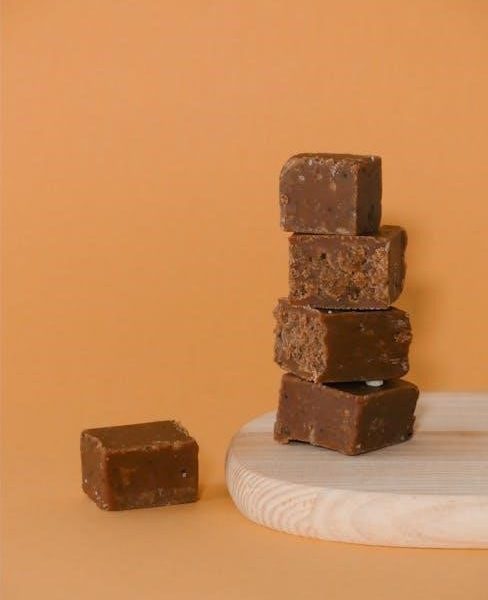
Duncan Hines Chewy Fudge Brownie mix is a popular choice for both novice and experienced bakers seeking a convenient route to decadent treats. The mix is specifically formulated to deliver a consistently chewy texture, a characteristic highly sought after in brownie enjoyment. Unlike some mixes that lean towards cakey results, this blend prioritizes a dense, fudgy consistency.
The package typically contains a pre-blended combination of flour, sugar, cocoa powder, and leavening agents, alongside flavorings designed to mimic a homemade brownie. However, crucial ingredients like eggs, oil, and water are left for the baker to add, allowing for a degree of customization and control over the final product. Understanding this balance – the pre-mixed base versus the fresh additions – is key to unlocking the mix’s full potential. It’s a reliable option when time is limited, yet quality isn’t compromised, offering a satisfying outcome for potlucks, bake sales, or simply a sweet indulgence.
Ingredients Breakdown & Quality
The Duncan Hines Chewy Fudge Brownie mix boasts a composition centered around enriched bleached flour, providing the structural base. Sugar, both granulated and brown, contributes to sweetness and, crucially, the desired chewy texture. Cocoa powder delivers the rich chocolate flavor, while a blend of modified food starch and baking soda acts as leavening agents.
Artificial flavors and salt enhance the overall taste profile. While convenient, the quality of these ingredients is a common point of discussion. The use of “artificial” components may deter some bakers seeking entirely natural options. However, Duncan Hines aims for consistent results through precise ingredient ratios. The quality is generally considered good for a boxed mix, offering a balance between affordability and taste. Adding higher-quality eggs and oil during preparation can further elevate the final product, bridging the gap between convenience and gourmet results.
Required Baking Equipment
Baking Duncan Hines Chewy Fudge Brownies requires minimal, readily available equipment. A 9×9 inch square baking pan is essential; glass or metal both work, though metal may bake slightly faster. Parchment paper is highly recommended to line the pan, ensuring easy brownie removal and cleanup. A mixing bowl, ideally medium to large, is needed for combining the ingredients.
Measuring cups and spoons are crucial for accurate ingredient proportions, vital for achieving the correct chewy texture. An electric mixer (handheld or stand) simplifies batter creation, though mixing by hand is perfectly feasible. A rubber spatula is invaluable for scraping down the sides of the bowl and ensuring all ingredients are fully incorporated. Finally, a toothpick is necessary for testing doneness – a clean toothpick indicates the brownies are ready. These basic tools will guarantee baking success!
Step-by-Step Baking Instructions
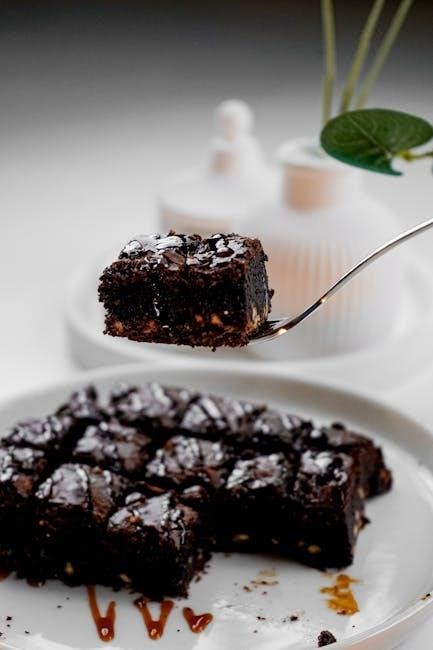
Follow these clear, concise steps to transform your Duncan Hines Chewy Fudge Brownie mix into a decadent treat! We’ll guide you through each stage, from preparation to enjoying the final result.
Preparing for Baking: Preheat & Pan Prep
Before diving into the batter, proper preparation is key for evenly baked, perfectly textured brownies. Begin by preheating your oven to 350°F (175°C) – consistent temperature is crucial. Next, select a 9×9 inch square baking pan; this size ensures the brownies aren’t too thin or thick.
Greasing the pan is essential to prevent sticking. You can use shortening, butter, or baking spray. For extra insurance against stubborn brownies, line the pan with parchment paper, leaving an overhang on two sides – this creates easy “handles” for lifting the finished brownies out cleanly. Ensure the parchment covers the bottom and extends up the sides slightly.
A well-prepared pan guarantees easy removal and beautiful, intact brownies. Don’t skip this step – it’s a small effort that yields significant results! Proper pan preparation sets the stage for baking success.
Mixing the Batter: Detailed Instructions
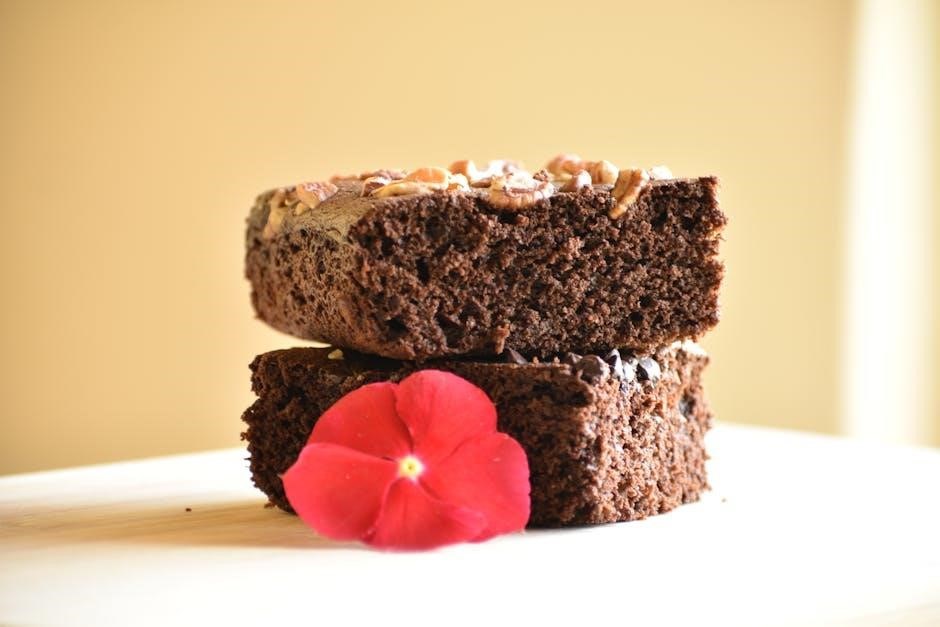
Creating the perfect Duncan Hines chewy fudge brownie batter is straightforward, but precision matters! In a large bowl, empty the entire brownie mix packet. Add the required ingredients – typically eggs, oil, and water – as specified on the box. Begin by gently combining the wet and dry ingredients with a spoon or spatula.
Mix until just combined. Overmixing develops gluten, leading to cakey, rather than chewy, brownies. A few streaks of flour are okay at this stage. The batter will be thick and fudgy. Avoid vigorous stirring; a gentle folding motion is best.
Scrape down the sides and bottom of the bowl to ensure all ingredients are fully incorporated. Once the batter is homogenous, it’s ready to be poured into your prepared baking pan. Resist the urge to lick the spoon… or don’t, we won’t judge!
Adding Eggs & Oil – The Importance of Consistency
The eggs and oil are crucial for the texture and richness of your Duncan Hines chewy fudge brownies. Using the correct amount, and incorporating them properly, is key. Typically, the mix calls for eggs and a vegetable or canola oil. Ensure your eggs are at room temperature for better emulsification – this helps bind the ingredients.
Add the eggs one at a time, mixing gently after each addition. This prevents the batter from becoming overworked. The oil should be added after the eggs, and mixed in until just combined. Consistency is vital; too little oil results in dry brownies, while too much can make them greasy.
Avoid adding extra eggs or oil, as this will significantly alter the brownie’s texture. Stick to the package directions for optimal results. A smooth, uniform mixture is the goal!
Incorporating Water – Achieving the Right Texture
Water plays a surprisingly important role in achieving the signature chewy texture of Duncan Hines fudge brownies. It hydrates the dry ingredients, activating the gluten and contributing to the overall moisture content. The package instructions will specify the amount of water needed – typically, it’s a relatively small quantity.
Add the water gradually, mixing until just combined. Overmixing at this stage can develop too much gluten, leading to cakey rather than chewy brownies. The batter should be smooth, but a few small lumps are perfectly acceptable. Don’t be tempted to add extra water, even if the batter seems thick.
Using cold water is generally recommended, as it helps prevent the butter (from the oil) from melting prematurely. This contributes to a denser, chewier final product. Proper water incorporation is a subtle but significant step!
Baking Time & Temperature
Precise baking time and temperature are crucial for achieving the desired chewy fudge brownie texture. Duncan Hines typically recommends baking at 350°F (175°C). However, oven temperatures can vary, so it’s wise to check your oven’s accuracy. The standard baking time for a 9×9 inch pan is usually around 25-30 minutes, but this is a guideline, not a rigid rule.
Begin checking for doneness around the 25-minute mark. Avoid opening the oven door frequently, as this can cause temperature fluctuations and affect the baking process. Consistent temperature is key; Remember, slightly underbaking is preferable for chewy brownies – we’ll cover that in detail later!
Always rely on visual cues and the toothpick test (described in the next section) rather than solely on the timer.
Checking for Doneness: The Toothpick Test
The toothpick test is your best friend when determining if your Duncan Hines chewy fudge brownies are perfectly baked. Insert a toothpick into the center of the brownies. For truly chewy brownies, you don’t want it to come out completely clean! A few moist crumbs clinging to the toothpick indicate ideal doneness.
If the toothpick comes out with wet batter, the brownies need a few more minutes in the oven. Check again every 2-3 minutes to avoid overbaking. Remember, overbaked brownies become dry and cakey, defeating the purpose of aiming for that coveted chewy texture.
It’s better to err on the side of slightly underbaked than overbaked. The brownies will continue to set as they cool, achieving the perfect consistency.
Achieving the “Chewy” Texture
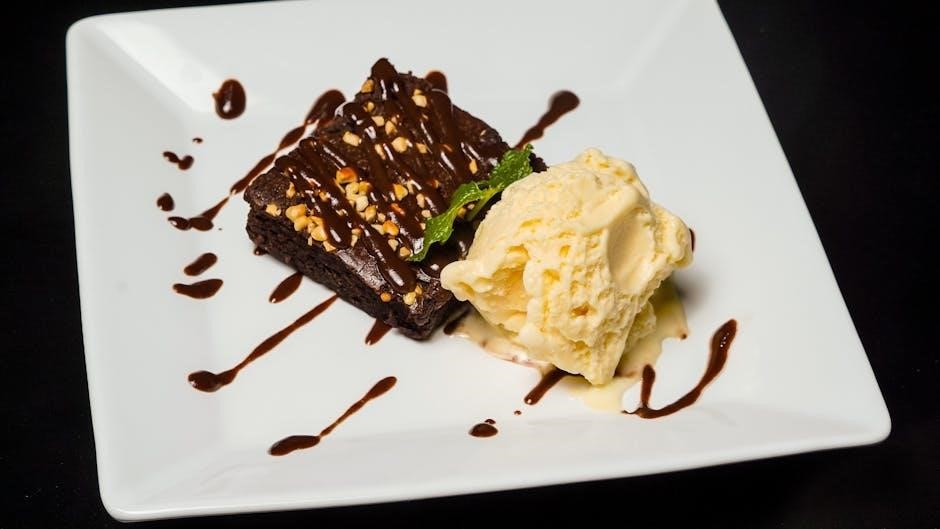
Unlock the secret to incredibly chewy brownies! Mastering techniques like utilizing brown sugar and slightly underbaking are key to achieving that perfect, delightful texture.
The Role of Brown Sugar in Chewiness
Brown sugar is a pivotal ingredient in achieving the signature chewy texture of Duncan Hines Chewy Fudge Brownies. Unlike granulated sugar, brown sugar contains molasses, which introduces moisture and acidity into the batter. This moisture contributes directly to a softer, more pliable crumb, preventing the brownies from becoming dry and crumbly.
The molasses also interacts with the gluten in the flour, inhibiting its development. Less gluten formation results in a tender, rather than tough, brownie. Furthermore, the acidity in brown sugar helps to invert some of the sucrose into glucose and fructose, further enhancing moisture retention and contributing to that desirable chewiness.
When following the Duncan Hines instructions, ensure accurate measurement of the brown sugar. Substituting with granulated sugar will significantly alter the final texture, leading to a cakeier outcome. The specific type of brown sugar (light or dark) can also subtly influence the flavor profile, with dark brown sugar offering a more pronounced molasses taste.
Underbaking Slightly for Optimal Results
A key secret to exceptionally chewy Duncan Hines Chewy Fudge Brownies lies in slightly underbaking them. While the instinct is to bake until a toothpick inserted into the center comes out clean, this often results in a drier, more cake-like texture. For optimal chewiness, aim for a slightly moist crumb.
The baking process continues even after removing the brownies from the oven. Residual heat will finish cooking them, solidifying the structure. Removing them when a toothpick emerges with a few moist crumbs attached ensures a fudgy, chewy interior.
However, avoid significantly underbaking, as this can lead to a gooey, unset center. Trust the Duncan Hines package instructions as a base, but begin checking for doneness a few minutes early. Remember, a slightly underbaked brownie is far preferable to an overbaked one when pursuing that perfect chewy texture!
Cooling Process: Preventing Cracking
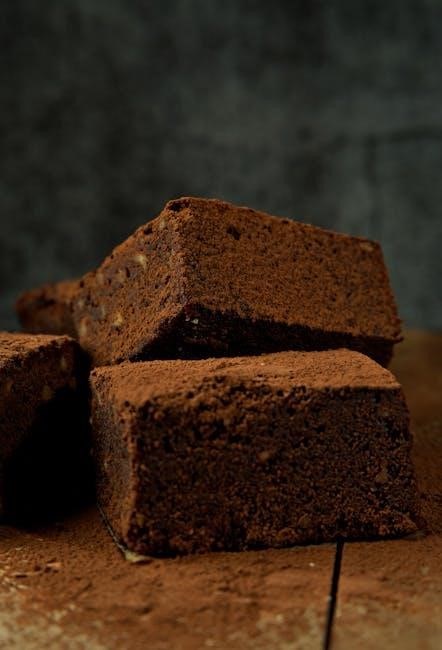
Proper cooling is crucial for preventing unsightly cracks in your Duncan Hines Chewy Fudge Brownies and maintaining their moist texture. A rapid temperature change can cause the brownies to contract unevenly, leading to surface fissures. Patience is key during this stage!
Allow the baked brownies to cool completely in the pan on a wire rack. Avoid the temptation to cut into them while still warm. This gradual cooling process allows the internal structure to set without stressing the surface.
For a cleaner cut and reduced cracking, consider chilling the brownies in the refrigerator for at least 30 minutes after they’ve cooled to room temperature. This firms them up, making slicing easier and minimizing crumbling. A slow, deliberate cooling process guarantees beautifully presented, perfectly textured brownies.
Variations & Add-Ins
Elevate your Duncan Hines brownies! Explore endless possibilities with chocolate chips, nuts, swirls, and frostings to customize flavor and texture, creating truly unique treats.
Chocolate Chips: Types & Amounts
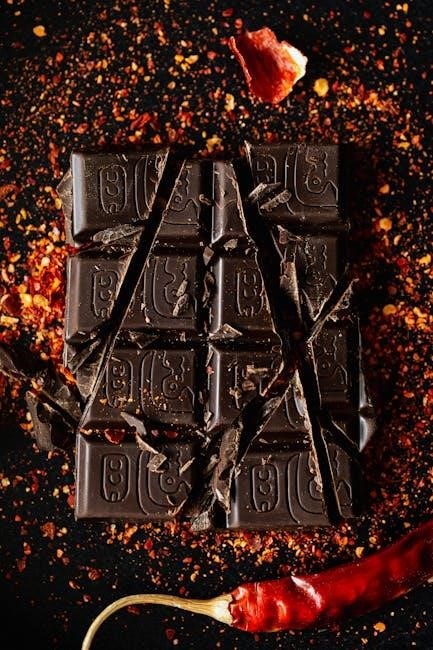
Enhance your Duncan Hines Chewy Fudge Brownies with the delightful addition of chocolate chips! The type and quantity significantly impact the final result. Semi-sweet chocolate chips are a classic choice, providing a balanced sweetness that complements the fudgy base. However, don’t limit yourself! Milk chocolate chips offer a creamier, sweeter experience, while dark chocolate chips introduce a richer, more intense flavor profile.
For a standard 9×13 inch pan, approximately 1 cup of chocolate chips is a good starting point. This provides a generous distribution without overwhelming the brownie. Feel free to adjust based on your preference – increase to 1 ½ cups for a truly chocolate-packed treat, or reduce to ½ cup for a more subtle inclusion. Consider using different types of chocolate chips in combination for a complex flavor; Miniature chocolate chips ensure even distribution throughout each bite, while larger chips create pockets of molten chocolate. Experiment and discover your perfect chocolate chip combination!
Nuts: Walnuts, Pecans & Other Options
Elevate your Duncan Hines Chewy Fudge Brownies with the satisfying crunch and flavor of nuts! Walnuts and pecans are classic additions, each offering a distinct taste. Pecans provide a buttery, slightly sweet flavor that pairs beautifully with the chocolate, while walnuts contribute a more earthy and robust note. Roughly chop the nuts before adding them to the batter for even distribution and a pleasant texture.
Approximately ½ to ¾ cup of chopped nuts is ideal for a 9×13 inch pan, but adjust to your liking. Beyond walnuts and pecans, consider other options like macadamia nuts for a tropical twist, or hazelnuts for a sophisticated flavor. Toasted nuts enhance their flavor and crunch – lightly toast them in a dry skillet or oven before incorporating them into the batter. Ensure the nuts are cooled before adding to prevent melting the chocolate. A sprinkle of sea salt over the nuts before baking further enhances their flavor!
Swirls & Frostings: Enhancing Flavor
Transform your Duncan Hines Chewy Fudge Brownies from delicious to decadent with creative swirls and frostings! A swirl of peanut butter, caramel, or cream cheese frosting adds a beautiful visual element and complementary flavor. To create a swirl, dollop spoonfuls of your chosen ingredient over the batter and gently use a knife or toothpick to create a marbled effect. Avoid overmixing, as this can muddy the colors and flavors.
For a richer experience, consider a chocolate or vanilla buttercream frosting after baking. A simple glaze made with powdered sugar and milk also provides a lovely finish. Experiment with flavor extracts like peppermint or raspberry in your frosting for an extra touch. Sprinkles, chocolate shavings, or a dusting of cocoa powder complete the presentation. Remember to let the brownies cool completely before frosting to prevent melting!
Troubleshooting Common Issues
Don’t despair over baking mishaps! This section addresses common problems like dry, cakey, or unevenly baked brownies, offering practical solutions for consistently perfect Duncan Hines results.
Dry Brownies: Causes & Solutions
Identifying the Culprit: Dry brownies often stem from overbaking, inaccurate ingredient measurements, or insufficient fat content in the batter. Carefully adhering to the package directions is paramount. Overmeasuring flour is a frequent offender, disrupting the delicate moisture balance.
Solutions for Moistness: Reduce baking time by a few minutes and diligently check for doneness using the toothpick test. Ensure precise measurements, utilizing measuring cups and spoons correctly. Consider adding an extra tablespoon of oil to the batter for increased richness and moisture.
Humidity’s Role: Environmental factors, like low humidity, can also contribute to dryness. If you live in a dry climate, slightly increasing the water content (one tablespoon) might be beneficial. Avoid opening the oven door frequently during baking, as this releases moisture. Remember, a slightly underbaked brownie is preferable to a dry one!
Cakey Brownies: Avoiding the Pitfalls
Understanding the Texture Shift: Cakey brownies typically result from too much flour, excessive mixing, or the incorporation of too much air into the batter. These factors develop gluten, leading to a lighter, more airy texture – desirable in cakes, but not brownies.
Preventative Measures: Measure flour accurately, spooning it lightly into the measuring cup rather than scooping. Gently combine ingredients until just mixed; avoid overmixing. Resist the urge to beat the batter vigorously, as this introduces excess air.
Fat & Moisture Balance: Ensure you’re using the correct amount of oil and eggs as specified in the instructions. These ingredients contribute to the brownie’s dense, fudgy texture. A slightly lower oven temperature can also help prevent a cakey rise. Prioritize a dense batter over a light and fluffy one!
Uneven Baking: Ensuring Consistent Results
Identifying the Problem: Uneven baking manifests as brownies that are cooked through in the center while edges are burnt, or vice versa. This often stems from inconsistent oven temperatures or improper pan placement.
Oven Calibration & Placement: Verify your oven’s accuracy using an oven thermometer. Position the baking pan in the center of the oven rack, away from heating elements. Avoid opening the oven door frequently during baking, as this causes temperature fluctuations.
Pan Material & Rotation: Dark metal pans bake faster, potentially leading to burnt edges. Consider using a lighter-colored pan or reducing the baking time slightly. Rotating the pan halfway through baking promotes even heat distribution. Ensure consistent batter depth throughout the pan for uniform results.
Nutritional Information & Allergen Details
Understand the dietary aspects! Each brownie serving contains approximately 150 calories, with key macronutrients and potential allergens like gluten, dairy, and nuts.
Calorie Count & Macronutrient Breakdown
Delving into the nutritional profile of a single Duncan Hines Chewy Fudge Brownie reveals a delightful, yet calorie-conscious treat. On average, one brownie contains approximately 150-170 calories, depending on portion size and any added ingredients like chocolate chips or nuts.
The macronutrient distribution typically breaks down as follows: carbohydrates contribute around 20-25 grams, providing a quick energy source. Fats account for approximately 8-10 grams, contributing to the brownie’s rich, fudgy texture. Protein content is relatively modest, around 2-3 grams per serving.
It’s important to note these values are estimates and can vary slightly based on specific baking practices and additions. For those mindful of sugar intake, a single brownie contains roughly 15-20 grams of sugar. Understanding this breakdown allows for informed dietary choices while still enjoying this classic dessert.
Allergen Information (Gluten, Dairy, Nuts)
For individuals with dietary restrictions, understanding the allergen content of Duncan Hines Chewy Fudge Brownies is crucial. The standard mix does contain wheat, classifying it as a gluten-containing product, and is therefore unsuitable for those with celiac disease or gluten sensitivities.
Furthermore, the mix incorporates dairy ingredients, making it a concern for individuals with lactose intolerance or dairy allergies. While the base mix itself doesn’t directly include nuts as ingredients, it’s manufactured in a facility that also processes tree nuts and peanuts.
This presents a risk of cross-contamination, potentially triggering allergic reactions in highly sensitive individuals. Always carefully review the packaging for the most up-to-date allergen information and consider alternative recipes if severe allergies are a concern. Vigilance is key to safe enjoyment!
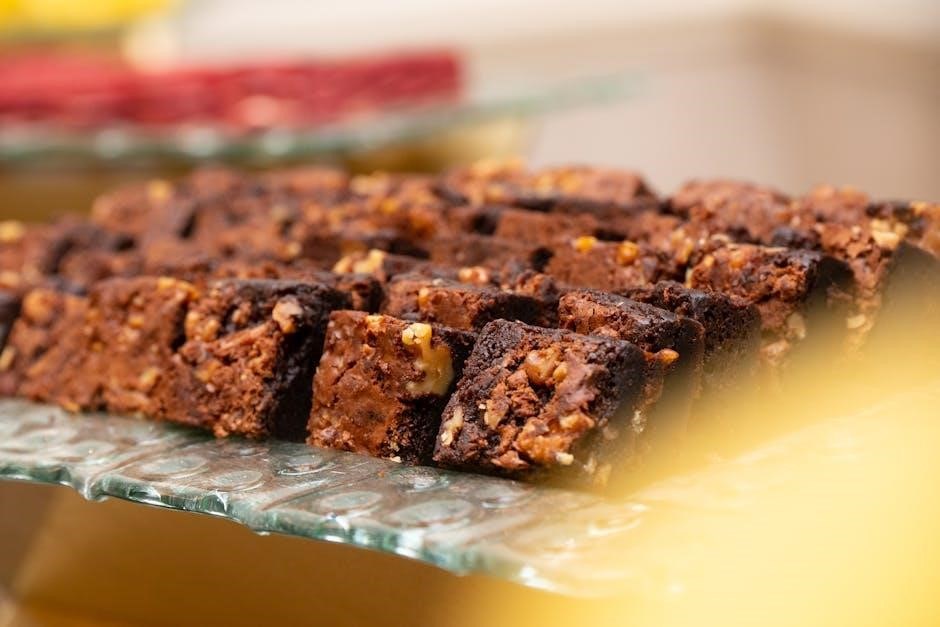
Comparison with Other Brownie Mixes (Pillsbury, Betty Crocker)
When evaluating brownie mixes, Duncan Hines Chewy Fudge consistently receives positive feedback regarding its intensely fudgy texture and rich chocolate flavor, often outperforming Pillsbury and Betty Crocker in blind taste tests. While Pillsbury tends to produce a lighter, more cake-like brownie, and Betty Crocker offers a wider variety of flavors, Duncan Hines excels in delivering that classic, chewy experience.
Some reviewers note that Kodiak Cakes mixes can have a grainy texture and lack robust chocolate notes, while Ghirardelli mixes, though premium, come at a higher price point. Duncan Hines strikes a balance between quality and affordability, making it a popular choice for everyday baking. Ultimately, preference varies, but Duncan Hines frequently emerges as a top contender for achieving consistently delicious, chewy fudge brownies.