
Georgia Pattern Jury Instructions: An Overview (Updated February 12, 2026)
Effective January 2026, Georgia courts will mandate written jury instructions in all criminal trials, a significant shift stemming from recent Supreme Court rule changes.
Georgia Pattern Jury Instructions serve as the foundational legal guidance provided to jurors during trials within the state. These instructions are meticulously crafted to clearly articulate the applicable law, ensuring jurors understand the legal principles governing the case before them. They are crucial for fair and consistent application of justice across Georgia’s court system.
Historically, these instructions were often delivered orally, leading to potential inconsistencies in comprehension and recall. However, a pivotal change, effective January 2026, mandates that juries in criminal trials receive these instructions in a written format. This modernization aims to enhance juror understanding and facilitate more informed deliberations.
The instructions cover a broad spectrum of legal issues, ranging from defining elements of crimes and outlining available defenses in criminal cases, to explaining principles of negligence and contract law in civil disputes. They are designed to be neutral and unbiased, presenting the law objectively to the jury, allowing them to apply it fairly to the presented facts.
II. Historical Context of Jury Instructions in Georgia
The evolution of Georgia’s jury instructions reflects a broader national trend towards standardization and clarity. Early practices relied heavily on judge-crafted instructions, delivered orally, often leading to variability in content and comprehension. This system, while allowing judicial discretion, presented challenges in ensuring consistent application of the law across different courts and cases.
Over time, efforts emerged to develop more standardized instructions, aiming to reduce ambiguity and potential for juror confusion. These early attempts lacked the formal structure of the current system, but laid the groundwork for a more cohesive approach. The move towards written instructions, culminating in the January 2026 mandate for criminal trials, represents a significant milestone.

This shift acknowledges the cognitive demands placed on jurors and seeks to empower them with a readily accessible reference point during deliberations. The historical trajectory demonstrates a commitment to improving the fairness and transparency of the judicial process through enhanced juror understanding of the law.
III; The Georgia Pattern Jury Instruction System
The Georgia Pattern Jury Instruction system serves as the primary resource for standardized legal guidance delivered to jurors throughout the state. It’s a meticulously curated collection of instructions, designed to articulate complex legal principles in a clear and understandable manner. This system isn’t merely a collection of templates; it represents a concerted effort to promote uniformity and predictability in jury verdicts.
The system’s development has been an ongoing process, continually refined through judicial review and feedback from the legal community. A key aspect is its adaptability – while providing standardized language, it allows judges some flexibility to tailor instructions to the specific facts of each case.
With the January 2026 rule changes mandating written instructions in criminal trials, the system’s importance is amplified, ensuring jurors have a permanent record for careful consideration during deliberations.
III.A. Origins and Development of the System
The genesis of the Georgia Pattern Jury Instruction system can be traced back to the mid-20th century, born from a recognized need for consistency in how legal principles were presented to juries. Early efforts involved compiling and refining instructions used by experienced judges across the state, aiming to reduce ambiguity and potential for misinterpretation.
Over decades, the system underwent numerous revisions, incorporating feedback from the judiciary, bar associations, and legal scholars. Each iteration sought to improve clarity, accuracy, and alignment with evolving case law. The process wasn’t simply about creating a standardized set of instructions; it was about fostering a shared understanding of the law.
Recent changes, particularly those taking effect in January 2026 with mandatory written instructions, represent a significant milestone in the system’s ongoing development, emphasizing juror comprehension and deliberate review.

III.B. Purpose and Goals of Standardized Instructions
The primary purpose of Georgia’s standardized jury instructions is to ensure fairness and consistency in the application of the law across all courtrooms. By providing pre-approved, legally vetted language, the system minimizes the risk of confusing or misleading jurors with poorly worded or legally inaccurate instructions.
A key goal is to enhance juror understanding. Clear, concise instructions empower jurors to fulfill their civic duty effectively, leading to more informed and just verdicts. The recent mandate for written instructions, beginning in January 2026, directly supports this goal, allowing jurors dedicated time for review.
Standardization also promotes judicial efficiency, reducing the time spent crafting and debating instructions in individual cases. Ultimately, the system aims to bolster public confidence in the judicial process by demonstrating transparency and impartiality.
IV. Key Components of Georgia Pattern Jury Instructions
Georgia Pattern Jury Instructions are fundamentally divided into two main categories: civil and criminal. Civil instructions guide jurors in cases involving disputes between individuals or entities, focusing on concepts like negligence, breach of contract, and damages. Conversely, criminal instructions address offenses against the state, outlining elements of crimes and potential defenses.
The format of these instructions is highly structured. Each instruction typically begins with a concise statement of the legal principle, followed by explanatory language tailored for laypersons. Crucially, the recent rule changes, effective January 2026, emphasize the importance of providing these instructions to jurors in a written format.
This standardized structure ensures clarity and consistency, aiding both judges in delivering instructions and jurors in comprehending their legal obligations. The goal is to minimize ambiguity and promote fair deliberations.
IV.A. Civil Instructions vs. Criminal Instructions

A core distinction within Georgia Pattern Jury Instructions lies between civil and criminal applications. Civil instructions address private disputes – think negligence claims, contract breaches, or property damage. These instructions focus on burdens of proof like “preponderance of the evidence,” requiring jurors to believe something is more likely true than not.
Criminal instructions, however, govern cases where the state prosecutes an individual for violating the law. Here, the standard is far higher: “beyond a reasonable doubt.” These instructions meticulously define each element of a crime, ensuring the prosecution proves every aspect.
Furthermore, criminal instructions extensively cover potential defenses, such as self-defense or insanity, guiding jurors on how to evaluate such claims. The January 2026 rule changes, mandating written instructions, apply equally to both civil and criminal cases, enhancing juror comprehension in all proceedings.
IV.B. Format and Structure of Instructions
Georgia Pattern Jury Instructions adhere to a standardized format designed for clarity and consistency. Each instruction begins with a numbered paragraph, clearly stating the legal principle. These are typically phrased in neutral language, avoiding legal jargon whenever possible, to ensure juror understanding.

Instructions are often broken down into specific elements, each addressing a crucial aspect of the legal claim or defense. Following the January 2026 rule changes mandating written instructions, this structured format becomes even more vital. Jurors will receive a complete written set, allowing for review during deliberations.
The pattern instructions also include bracketed notes for the judge, offering guidance on tailoring the instruction to the specific facts of the case. This balance between standardization and flexibility is a key feature of the Georgia system.
V. Recent Changes to Georgia Jury Instruction Rules (Effective January 2026)
Significant updates to Georgia’s jury instruction rules took effect in January 2026, primarily focusing on enhancing juror comprehension and deliberation processes. The most prominent change is the requirement for mandatory written instructions in all criminal trials. Previously, providing written instructions was at the judge’s discretion.
This shift aims to address concerns about jurors’ ability to recall complex legal concepts delivered orally. Providing a written record allows jurors to refer back to the law during deliberations, potentially leading to more informed and accurate verdicts. The Supreme Court adopted these changes to modernize the system and improve fairness.

These new rules necessitate careful attention to the clarity and organization of instructions, reinforcing the importance of the standardized format offered by the Georgia Pattern Jury Instructions.
V.A. Mandatory Written Instructions
Beginning in January 2026, Georgia law now requires that all criminal juries receive their instructions in a written format. This represents a fundamental change from the previous practice, where judges had the discretion to provide instructions orally only. The impetus behind this rule change is a desire to improve juror comprehension and facilitate more effective deliberations.
The written instructions must be provided to the jury at the conclusion of all evidence presentation, allowing jurors to review the legal principles governing their decision-making process throughout deliberations. This ensures a permanent record of the law, reducing reliance on potentially imperfect recollection of oral pronouncements.
Courts are expected to utilize the Georgia Pattern Jury Instructions as a foundation for these written documents, ensuring consistency and clarity across the state’s judicial system.
V.B. Impact on Jury Deliberations
The introduction of mandatory written jury instructions is anticipated to profoundly impact the jury deliberation process in Georgia criminal trials. Providing jurors with a physical copy of the instructions allows for continuous reference, potentially minimizing misunderstandings and fostering more focused discussions on the applicable law.
Legal experts suggest this change may lead to more consistent verdicts, as jurors can readily revisit specific elements of crimes or affirmative defenses during their deliberations. The written format also encourages a more systematic approach to applying the law to the facts presented at trial.
Furthermore, written instructions empower jurors to actively participate in clarifying ambiguities, potentially reducing the influence of individual juror interpretations and promoting a more collaborative decision-making environment.
VI. Specific Instruction Areas – Criminal Law
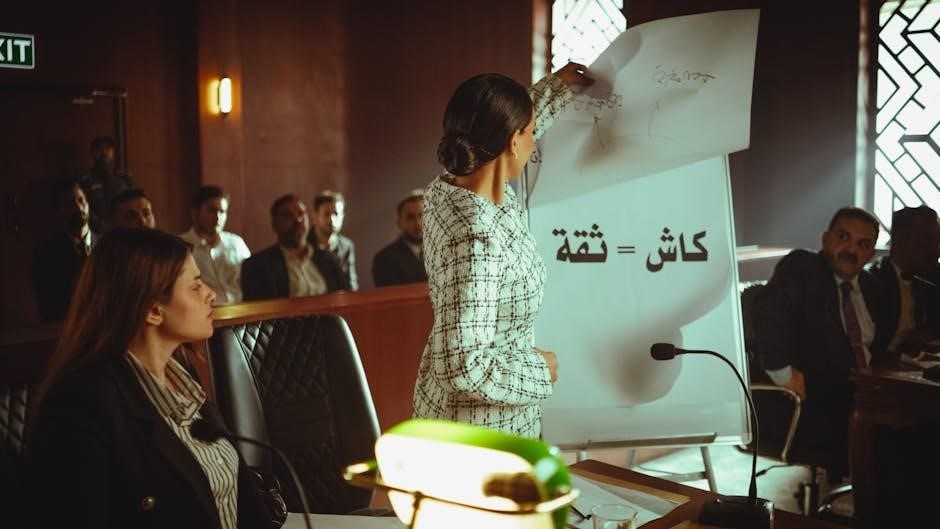
Georgia Pattern Jury Instructions dedicate substantial coverage to criminal law, providing standardized language for a wide array of offenses. These instructions meticulously detail the elements each crime requires for a conviction, ensuring clarity for jurors. Common areas include instructions for homicide offenses – murder, manslaughter, and voluntary/involuntary manslaughter – outlining the specific mens rea and actus reus needed for each.
Significant attention is also given to property crimes like burglary, arson, and theft, with instructions carefully defining the intent and actions constituting these offenses. Furthermore, the instructions comprehensively address various defenses, including self-defense, defense of others, and the complex legal standard for insanity.
The pattern instructions aim to present these legal concepts in a manner accessible to laypersons, while maintaining precision and adherence to Georgia case law.
VI.A. Instructions on Elements of Crimes
Georgia Pattern Jury Instructions prioritize clearly defining the essential elements of each crime. These instructions meticulously break down each offense into its constituent parts – the actus reus (the guilty act) and the mens rea (the guilty mind). For example, instructions for aggravated assault will specify the required act (causing physical harm) and the mental state (intent to cause serious bodily injury).
The pattern instructions emphasize that the prosecution bears the burden of proving each element beyond a reasonable doubt. Jurors are explicitly instructed that a finding of not guilty is warranted if the prosecution fails to establish even one element of the crime.
These instructions are designed to prevent confusion and ensure jurors understand precisely what must be proven for a conviction, fostering fair and accurate verdicts.

VI.B. Instructions on Defenses (e.g., Self-Defense, Insanity)
Georgia Pattern Jury Instructions provide detailed guidance on various criminal defenses, including self-defense, defense of others, and insanity. When self-defense is asserted, instructions clarify the legal requirements – a reasonable belief of imminent danger of death or great bodily harm, and the use of only such force as necessary to repel the threat.
Regarding the insanity defense, instructions align with Georgia’s legal test, often involving whether the defendant understood the nature and quality of their act, or if they knew it was wrong. The burden of proof regarding insanity typically rests with the defendant.
Crucially, the instructions emphasize that even if a defendant successfully proves a defense, it doesn’t automatically equate to innocence; rather, it establishes a legal justification or excuse for their actions, leading to an acquittal.
VII. Specific Instruction Areas – Civil Law
Georgia Pattern Jury Instructions comprehensively cover numerous civil law areas, offering standardized language for common claims. A significant portion focuses on tort law, particularly negligence. Instructions detail the elements of negligence – duty, breach, causation, and damages – guiding jurors through assessing liability in personal injury, property damage, and other negligence-based cases.
Contract law receives substantial attention, with instructions addressing breach of contract, specific performance, and available remedies. These instructions clarify concepts like offer, acceptance, consideration, and the interpretation of contract terms.
Furthermore, instructions exist for areas like property law, nuisance, and fraud, ensuring consistent application of legal principles across Georgia’s courts. The goal is to provide clarity and minimize confusion for jurors deciding civil disputes.
VII.A. Instructions on Negligence
Georgia Pattern Jury Instructions dedicate extensive coverage to negligence, a cornerstone of civil litigation; These instructions meticulously define each element required to establish a negligence claim: duty of care, breach of that duty, proximate causation, and actual damages. Jurors are guided to determine if the defendant owed a legal duty to the plaintiff, and whether their actions (or inaction) fell below the reasonable standard of care.
Crucially, the instructions address the concept of proximate cause, explaining how the defendant’s breach must be a direct and foreseeable cause of the plaintiff’s injuries. Detailed guidance is provided on assessing damages, including compensatory damages for medical expenses, lost wages, and pain and suffering.
Variations exist for specific negligence scenarios, like premises liability and negligent infliction of emotional distress, ensuring tailored guidance for diverse cases.
VII.B; Instructions on Contract Law
Georgia Pattern Jury Instructions provide comprehensive guidance for contract disputes, covering essential elements like offer, acceptance, and consideration. Instructions detail the requirements for a valid contract, emphasizing the need for mutual assent and legally sufficient consideration – something of value exchanged by each party. Jurors receive clear direction on interpreting contract language, including addressing ambiguities and parol evidence rules.
Specific instructions address common contract defenses, such as mistake, fraud, duress, and unconscionability. The instructions also delineate the remedies available for breach of contract, including expectation damages, reliance damages, and specific performance.
Furthermore, the pattern instructions cover concepts like third-party beneficiaries and conditions precedent, offering nuanced guidance for complex contractual arrangements.
VIII. Accessing Georgia Pattern Jury Instructions
Georgia’s pattern jury instructions are readily accessible to legal professionals and the public through several avenues. The State Bar of Georgia offers a subscription-based online service providing the complete and updated set of instructions, searchable by topic and keyword. This digital platform ensures attorneys have the most current versions for trial preparation.
Additionally, printed volumes of the instructions are available for purchase from legal publishing companies specializing in Georgia law. Many county law libraries also maintain copies of the pattern instructions for reference by attorneys and pro se litigants.
While not an official source, some free access is available through publicly accessible legal research websites, though verifying the instruction’s currency is crucial. The Georgia Courts website provides links to relevant resources and information regarding jury instructions.
IX. Challenges and Criticisms of the System
Despite the benefits of standardized instructions, Georgia’s pattern jury instruction system faces ongoing challenges. Critics argue that some instructions remain overly complex, potentially confusing jurors and hindering their ability to properly deliberate. Concerns also exist regarding the perceived rigidity of the patterns, limiting a judge’s ability to tailor instructions to the unique facts of a specific case.
Another point of contention centers on the updating process; while revisions occur, some argue they are not frequent enough to reflect evolving case law. Furthermore, ensuring consistent application of the instructions across all Georgia courts remains a challenge, leading to potential disparities in outcomes.
Accessibility for pro se litigants also presents a hurdle, as understanding the legal language requires significant effort. Ongoing debate surrounds balancing standardization with judicial discretion.
X. Resources for Attorneys and Jurors
Attorneys practicing in Georgia courts have several key resources available regarding pattern jury instructions. The State Bar of Georgia’s website provides access to the official Georgia Pattern Jury Instructions, alongside related practice aids and continuing legal education (CLE) materials focused on effective instruction drafting and delivery.
Additionally, legal research databases like Westlaw and LexisNexis offer comprehensive collections of Georgia jury instructions, case law interpreting them, and analytical commentary. For jurors, while direct access to the patterns isn’t typically provided, courts are increasingly focused on clear and concise instruction delivery.
Information regarding juror rights and responsibilities, including the role of instructions, can be found on the Georgia Judicial Branch website. Further assistance can be sought from court clerks and legal aid organizations.

The evolving landscape of Georgia’s jury instruction system reflects a commitment to clarity and fairness within the judicial process. Historically, instructions were primarily delivered orally, leaving room for ambiguity and potential misunderstanding amongst jurors. However, recent amendments to the Georgia Rules of Evidence, effective January 2026, introduce a significant change: mandatory written instructions in criminal trials.
This shift aims to enhance juror comprehension and facilitate more informed deliberations. The Georgia Pattern Jury Instructions serve as the foundational framework, offering standardized language for common legal principles. These patterns are regularly updated to reflect changes in case law and statutory provisions, ensuring their continued relevance and accuracy.
Understanding these instructions is crucial for both legal professionals and those serving on juries, promoting a more transparent and equitable legal system throughout Georgia.